Crime & Safety
Like 'Rats Of NIMH,' 75 Remaining Rodents In Rocky Point Home Have Rescuers Scrambling To Catch Them
SEE PHOTOS FROM THE RESCUE: They have an intricate series of tunnels, and know where to hide to evade rescuers. "We are the visitors."



ROCKY POINT, NY — The rats of 'NIMH' would be proud.
About 75 super smart and totally in control domestic rats are hiding out in a condemned home in Rocky Point, after evading the efforts of humans — not scientists from the National Institute of Mental Health, as detailed in the beloved children's book and movie — but rather animal rescuers trying to rescue and introduce them to a safer environment.
Since the rescue operation began around two weeks ago, 400 rats, including about 12 litters of pups, have been rescued from the home, with around 225 already placed with rescues from Maine to Virginia Beach, while the remaining roughly 150 are being held pending placement, according to Strong Island Animal Rescue.
Find out what's happening in Miller Place-Rocky Pointfor free with the latest updates from Patch.
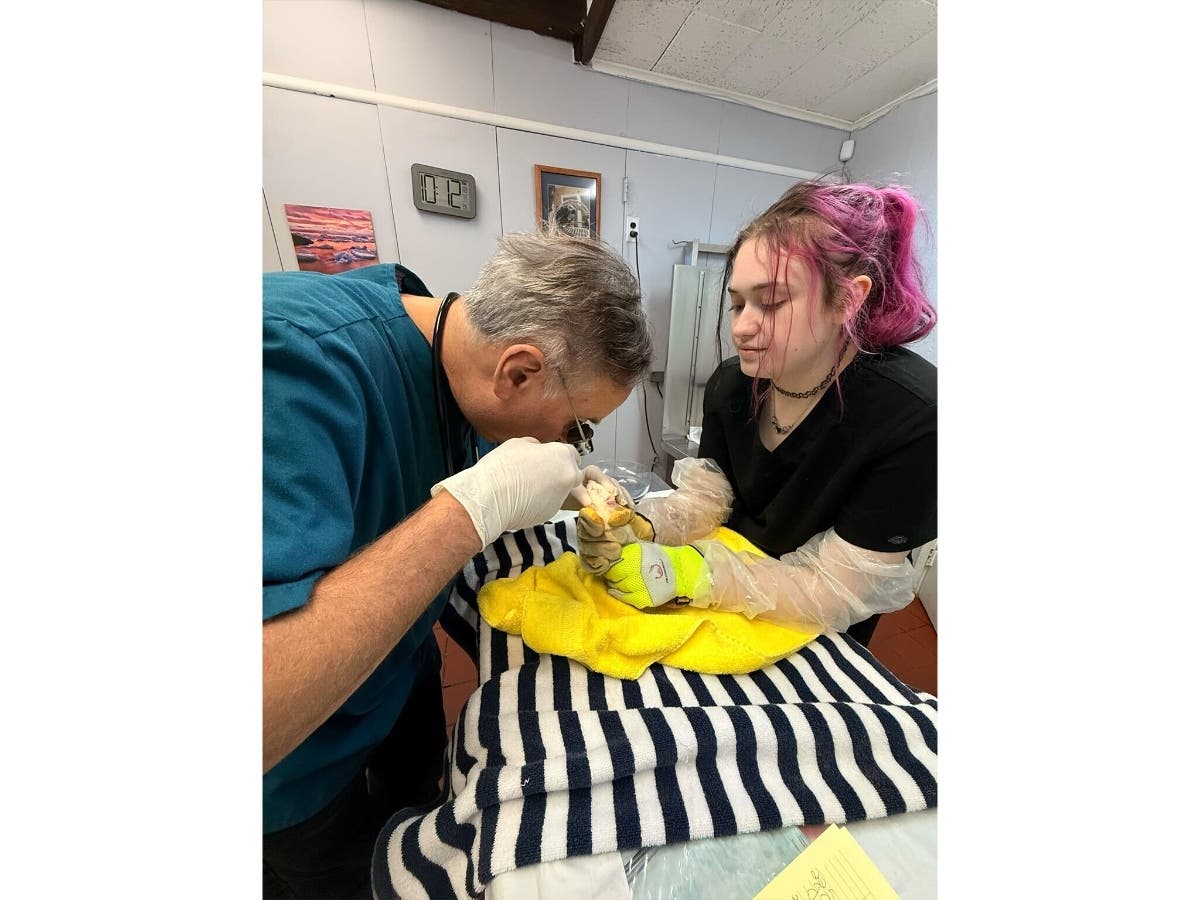
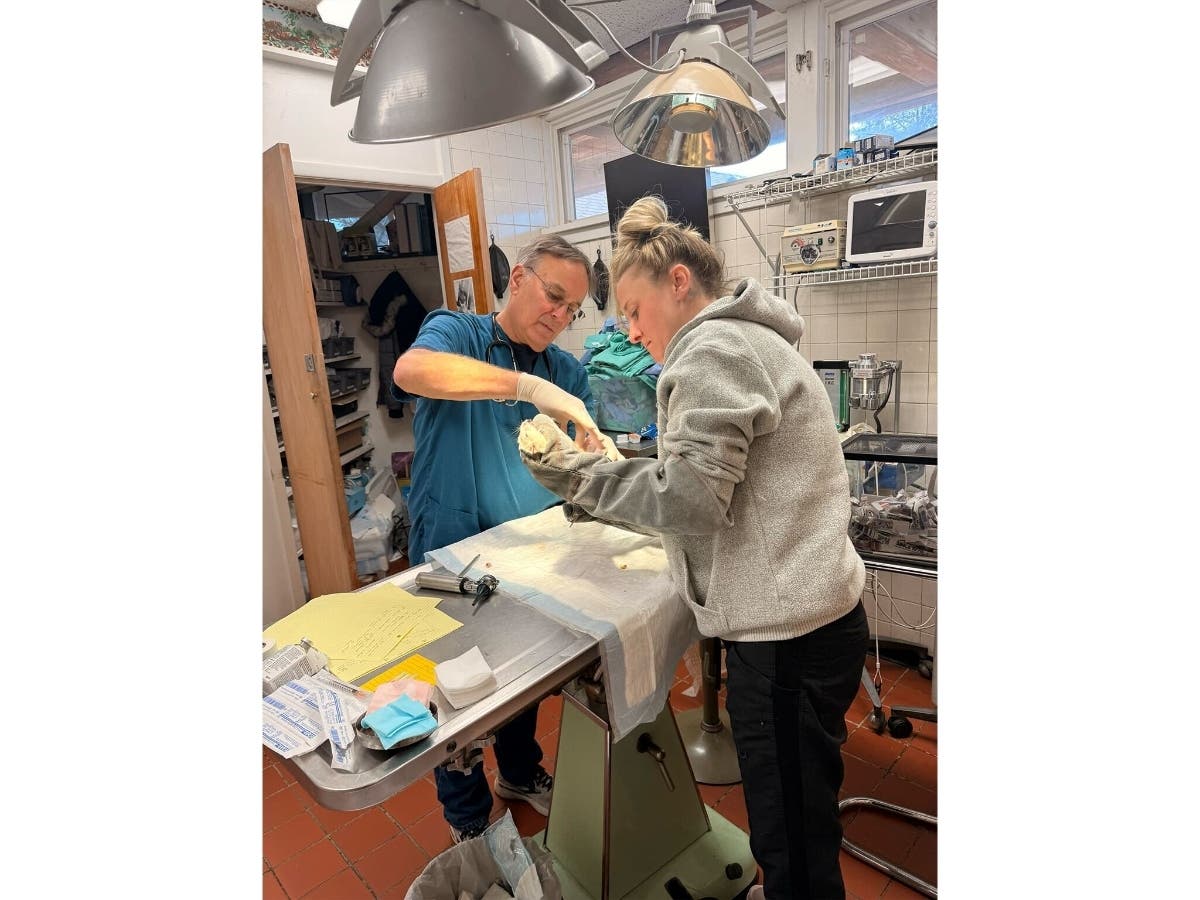
The rescued rats have been medically treated for ear mites and bite wounds at Jefferson Animal Hospital in Port Jefferson Station, where a retired veterinarian specializing in exotic pets has chipped in to help with their care, according to the organization's co-founder, Erica Kutzing.
The rats are mostly white, though there are some that are hairless.
Find out what's happening in Miller Place-Rocky Pointfor free with the latest updates from Patch.
"We're seeing a lot of ruptured eyes," she said. "Everyone has mites, so we've got a lot with missing fur. And it's disheartening, because when kept properly, rats are extremely clean and they're very smart. They can be trained to be potty trained, and so to see these animals in this condition is especially disturbing."
In the rescue operation, about 25 rats, including litters, were found dead inside the house, and only around a handful have been euthanized, Kutzing said.
The remaining straggler rats have become wise to their rescuers, and while they do come out, they are much stealthier than their human counterparts.
"They have made intricate tunnels throughout the house, whether it be through plumbing or the walls," Kutzing said. "They know the house far better than we do. Yeah, and they have created a system to survive in there that we don't know about."
"This is definitely their house, and we, you know, we're the visitors," she added of the ranch-style home.
They're tame and will come out to greet the rescue team, but any hint that they will be scooped up and they're gone.
"They've spent a lot of time creating the house the way that they wanted to, and they've got it all mapped out in their heads," she said. "They know where to go. When we zig, they zag. So it's made them difficult to catch, especially these last, I'd say, maybe 75 that are there."
In the story, "Mrs. Frisby and the Rats of NIMH" written by Robert C. O'Brien, the rats are experimented on and develop human intelligence, prompting them to escape, along with two mice, from NIMH. They end up taking up residence under a large rose bush on a farm, and steal electricity to power their highly-evolved underground civilization.
The story was later developed into a movie, "The Secret of NIMH."
Two Domestic Mice Amid The Colony, And An Ominous Owl Hooting Nearby
The rats were not the only rodents found inside the house.
Two mice, that were found living inside of a cage, like the characters of Jonathan Brisby and Mr. Ages.
As the rescue operation has been going on, there has been a pair of watchful eyes.
"I will say that when we leave at night, there's a very ominous hooting owl that is outside the house. It's very reminiscent of 'The Secret of NIMH,'" she said.
In the story, when Jonathan Frisby's widow visits an owl living nearby for advice on how to move her home before plowing season, it tells her to consult the rats living under the rose bush, making for a tense scene in the movie, as owls are natural predators of mice.
One night, as she and her co-founder Frankie Floridia were leaving the owl was hooting, and Kutzing remarked, "This owl is probably saying, 'If you need my help, I'll assist you.'"
A Hard Job Ahead
The rats seem to be out of reach, with the rescue team trying their hardest to capture them.
Now that the number has been reduced, they are much more difficult to catch.
Like the rose bush in the story, the rats have preferred area to hide — under a sink.
"They know the places to hide, like they're under the sink, and they know to hide there, because we can't get through the pipes and everything," Kutzing said. "They're a hell of lot smarter than we are."
One rescuer has even developed a system of sitting on a bucket over a plate of food and then slowly lowering her hand to snatch them up one-by-one.
It's an inside joke that she is the top rat catcher.
But aside from the brevity of moments like those, it's been a tough case for the group.
"It's hard to see any living being suffer, because we all have felt pain, and to know that if anything is feeling any magnitude of pain, if you have empathy, it hurts to even imagine that for them," she said. "Whether you like them or not, you don't wish that upon them."
The house came to the attention of the authorities recently, and was condemned by the Town of Brookhaven, a spokesman said. The owner was also issued a violation, and told to clean the property up, according to the Suffolk County Department of Health Services.
A woman living at the home was also charged with animal cruelty, court documents show. She has denied the charges, the records show.
Kutzing would not fault the rats' former owner though, saying that she "truly believes" she is "a lover of rats," but the situation quickly got out of hand, and it was "overwhelming."
She could only speculate.
Rats can reproduce by giving birth every 20 days, and can soon become pregnant again. The period for their offspring to grow up and become sexually mature is also very short — only a couple of weeks.
"And so you're thinking, if they can have anywhere from six to 12 pups in a litter, and they're doing that every 20 days, this number can spiral out of control extremely quickly," she said. "I would think it would overwhelm anyone. And I think she started with amazing intentions."
"She loved her rats; I know she did," she said. "I think this just got out of hand, and caught her by surprise."
Kutzing said its important for the public to keep in mind that the animals are domesticated.
"These are not wild rats," she said. "There's a big difference between the breed that we are dealing with compared to the rats that someone might find in their garage or their basement that they see as a nuisance."
"Because a lot of people are saying, 'Oh, my God, rats, I'm going to put a trap out,'" she said. "People are coming through with their opinions. I think that people just need to realize that these are domestic breeds — they would never survive outside. They are conditioned through years and years and years of breeding to be indoor pets, and so to expect that we could just open the doors, set them free, and the neighbors could take care of them in whatever the way they saw fit, that's not how it would work."
"That would be the same as abusing a cat or a dog," she added. "Abandonment is abandonment when it's a domestic animal."
Moving Forward With The Rescue
Strong Island's co-founder Frankie Floridia described the rescue so far as "an amazing group effort" and that he is very happy with the outcome so far."
Rescuer Keri Pisani said that there has been about a half dozen rescues that have adopted out or placed rats with foster owners.
"The rat rescue community has been very welcoming, and amazing, and easy to work with," she added.
When Floridia first learned of the crisis from authorities, he was very concerned and feared the group might not be able to save all of the rats, but he is much more confident now and plans to keep "working vigorously."
"Rats make great pets," he said, adding that they should be kept separate or spayed and neutered. "They're clean, cuddly animals, and they deserve a second chance like any other animal."
The team has been spoiling the remaining rats daily, plumping them up with their favorite treat of Cheerios cereal, and fresh vegetables.
"I brought a bunch of fresh vegetables, like cucumbers, and stuff like that, which is really good for hydration with them, because when we first started, they were pretty dehydrated," Kutzing said.
But the feeding has changed.
"In the beginning, they were taking food from us," Kutzing, explained, adding, that the remaining rats are "very aware of what we're trying to do."
"Because they were living in a house full of rats, and now, all of a sudden, that number has dwindled quite a bit," she said. "They figured us out faster than I think many people who have never had a rat expected."
Get more local news delivered straight to your inbox. Sign up for free Patch newsletters and alerts.